Introduction
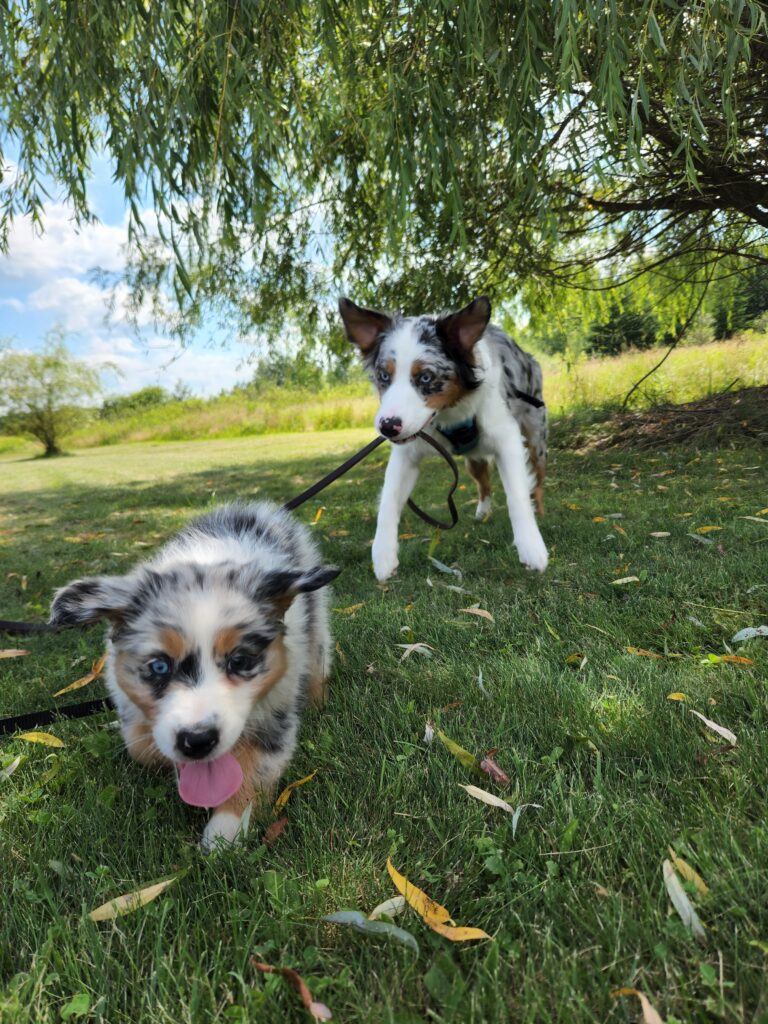
Introducing a new puppy to your existing dog (or dogs) can feel exciting—and a little uncertain.
Because of that, taking a structured, thoughtful approach will help create a smooth and positive transition for everyone involved.
When introductions are handled well, they build the foundation for a calm, respectful relationship within your home.
🐾 Why a Thoughtful Introduction Matters
Not every dog immediately welcomes a new puppy.
In fact, many adult dogs need time to adjust to:
- a new presence in their space
- increased energy and activity
- changes to their routine
Because of this, a slow and controlled introduction helps prevent stress, confusion, and conflict.
👉 The goal is not instant friendship—it’s mutual comfort and respect.
🐾 Step 1: Start With a Controlled Introduction
Begin introductions in a calm, controlled setting.
Because of that, it’s helpful to:
- keep the puppy safely contained (crate or kennel)
- allow your older dog to observe from a distance
- give them time to sniff and investigate
This process may take anywhere from 15 minutes to an hour.
👉 Let your existing dog set the pace.
🐾 Step 2: Move to Supervised Interaction
Once your dog appears relaxed, you can begin short, supervised interactions.
However, it’s important to watch closely.
You may notice:
- growling
- small corrections
- boundary-setting behavior
Because of that, remember these are normal communication signals—not necessarily aggression.
👉 Puppies learn important social skills from these interactions.
🐾 Step 3: Monitor Body Language
Understanding body language is key during introductions.
Signs of a positive interaction include:
- relaxed posture
- loose, wagging tails
- play bows
- soft facial expressions
However, watch for signs of stress:
- yawning or turning away
- stiff body or tense jaw
- tail tucked or held low
- raised hair along the back
Because of this, step in early if things feel tense.
🐾 Step 4: Give Breaks and Manage Energy
Puppies can become overwhelming quickly.
Because of that, regular breaks are important.
You can:
- separate the dogs for rest
- redirect the puppy with a toy
- keep interactions short and positive
👉 This helps prevent overstimulation and frustration.
🐾 Step 5: Reinforce Positive Behavior
Reward calm, appropriate behavior from both dogs.
Because of that, use:
- treats
- praise
- gentle encouragement
As a result, both dogs begin to associate each other with positive experiences.
🐾 Step 6: Be Careful With Outside Interactions
Introducing your puppy to unfamiliar dogs requires extra caution.
Because of that:
- always ask permission before interactions
- watch both dogs closely
- avoid overwhelming environments early on
👉 Not every dog wants to interact—and that’s okay.
🐾 Building Long-Term Harmony
Successful introductions don’t happen in one moment—they happen over time.
Because of that, consistency and patience are key.
Focus on:
- structured routines
- continued supervision
- gradual increases in interaction time
👉 Over time, this builds trust and understanding between your dogs.
🐾 Our Approach at Match Dot Pup
At Match Dot Pup, we begin early socialization and exposure before puppies ever go home.
Because of that, our puppies are better prepared to:
- adapt to new environments
- interact with other dogs
- respond to guidance
This helps make introductions smoother and more successful for new families.
🐾 Final Thoughts
Introducing a new puppy to your pack is a process—not a single event.
Because of that, taking your time and focusing on calm, positive interactions will lead to the best outcome.
👉 With patience and structure, your dogs can learn to coexist—and even thrive together.
🐾 Related Reading
To help you prepare for your new puppy:
- Bringing Home a New Puppy: What to Expect
- Bringing Your Puppy Home: The First 30 Days
- Puppy Temperament: Why It Matters More Than You Think
- Getting Two Puppies Together: What to Consider
🐾 Ready to Learn More?
👉 Learn more about our process:
How to Get My Puppy
👉 View current puppies:
Available Puppies