INTRO
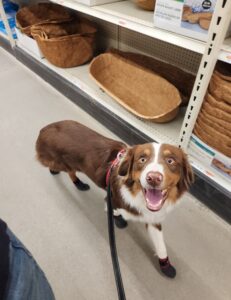
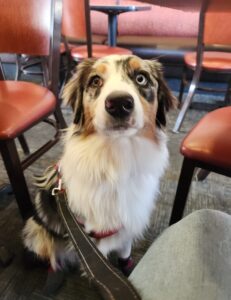
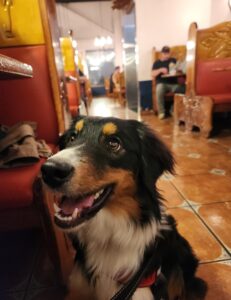
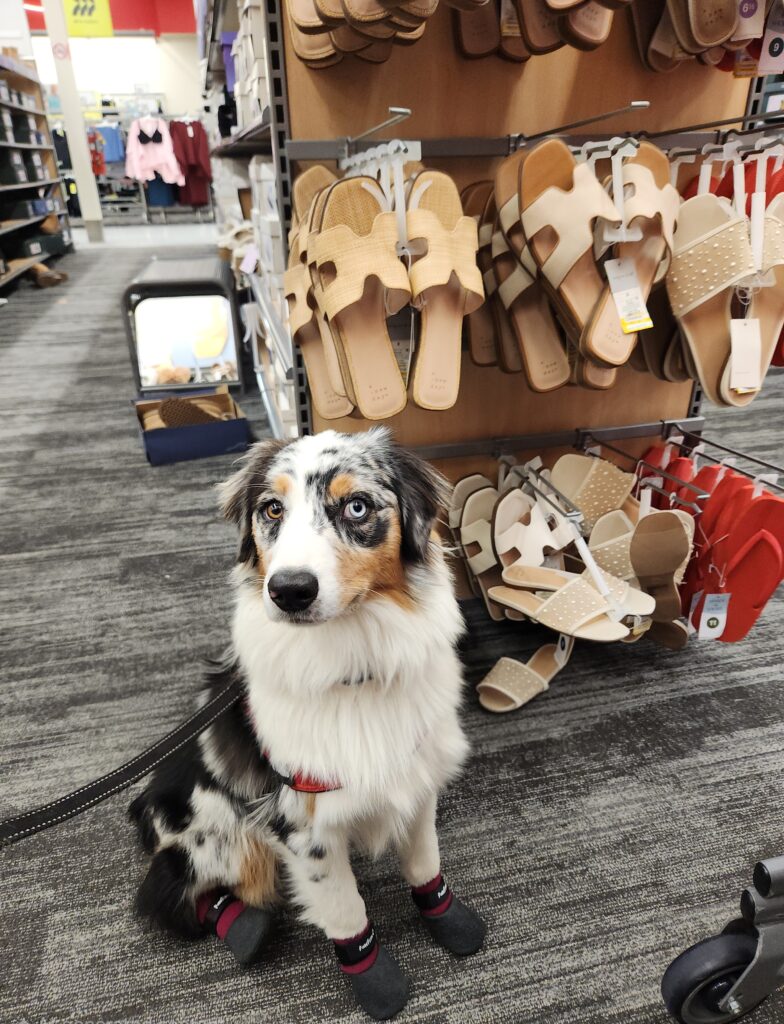
One of the biggest parts of service dog development is public access training.
While many people focus on task training, service dogs must also learn how to calmly and safely navigate everyday environments filled with distractions, movement, noise, and unpredictability.
Public access training helps prepare dogs to remain stable, focused, and well-mannered while accompanying their handler through daily life.
WHAT IS PUBLIC ACCESS TRAINING?
Public access training refers to teaching a service dog how to appropriately behave in public settings.
This includes learning how to:
• remain calm around distractions
• walk politely on leash
• settle quietly
• ignore food and people
• recover from unexpected situations
• remain focused on their handler
The goal is not perfection—it is creating a dog that can confidently and safely function in everyday environments.
PUBLIC ACCESS INVOLVES REAL-WORLD ENVIRONMENTS
Service dogs may accompany their handler into a wide variety of settings, including:
• stores
• restaurants
• medical facilities
• elevators
• sidewalks and parking lots
• crowded environments
• public events
Each environment introduces different sounds, surfaces, smells, and distractions that the dog must learn how to navigate calmly.
CONFIDENCE MATTERS
Public access training is not only about obedience.
Dogs also need confidence and recovery in order to handle unpredictable situations without becoming overwhelmed.
Examples may include:
• loud noises
• dropped objects
• shopping carts
• automatic doors
• sudden movement
• crowds
Confident dogs are often better able to process these situations and return to a calm working mindset.
NEUTRALITY IS IMPORTANT
One of the biggest goals in public access work is neutrality.
Service dogs should learn to:
• ignore strangers
• remain calm around dogs
• avoid reacting to distractions
• stay engaged with their handler
Neutrality helps the dog remain focused and reliable in busy environments.
TRAINING HAPPENS GRADUALLY
Strong public access skills are built slowly over time.
Dogs benefit from gradual exposure to increasingly challenging environments while continuing to build confidence and engagement.
Rushing the process can lead to overwhelm, stress, or setbacks.
Short, positive experiences are often more beneficial than long or overly difficult outings early on.
NOT EVERY DOG ENJOYS PUBLIC ACCESS WORK
Some dogs naturally struggle with the environmental pressure involved in public settings.
This may include:
• sound sensitivity
• overstimulation
• difficulty recovering
• reactivity
• environmental stress
Even wonderful dogs may not always be suited for the constant demands of public access work.
THE MATCH DOT PUP APPROACH
At Match Dot Pup, we place a strong emphasis on temperament, early development, and thoughtful exposure when identifying and developing future service dog candidates.
Puppies are gradually introduced to different environments, sounds, surfaces, movement, handling experiences, and real-life situations designed to help build confidence, recovery, adaptability, and engagement over time.
We carefully observe traits such as human focus, recovery, motivation, sensitivity levels, and environmental stability as puppies continue to develop.
FINAL THOUGHTS
Public access training is one of the most important parts of service dog development.
Beyond obedience and task work, service dogs must learn how to confidently navigate the real world while remaining calm, stable, and connected to their handler.
When thoughtful temperament, gradual exposure, and consistent training work together, dogs develop stronger foundations for long-term success in public environments.
🐾 Ready to Learn More?
👉 Learn more about our Service Dog Program:
Service Dog Program
👉 See how candidates are developed:
Service Dog Training & Outcomes
🐾 Related Reading
Can You Train Your Own Service Dog? What to Know First
Why Confidence Matters in Service Dog Training
How to Tell if a Puppy Has Service Dog Potential
Service Dog Puppy Traits
Why Most Puppies Fail Service Dog Training