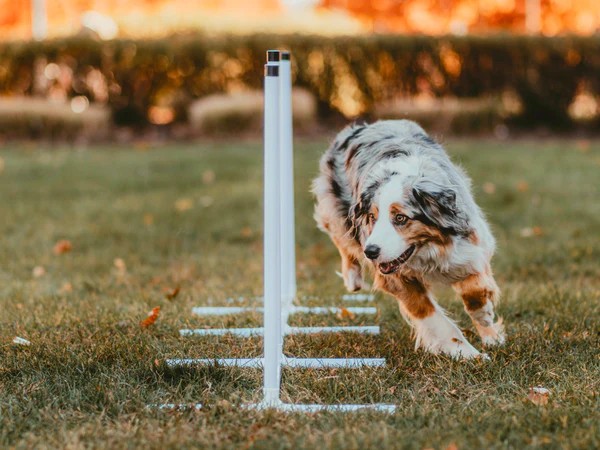
If jumps build coordination, weave poles build focus and precision.
Weave poles are one of the most mentally challenging agility obstacles. They require your dog to slow down, think, and move their body with control—all while staying connected to you.
For Australian Shepherds, this is where their intelligence really shines.
Why Weave Poles Matter
Weave poles develop:
- Focus and concentration
- Body awareness and flexibility
- Problem-solving skills
- Handler connection
Unlike fast obstacles, weave poles teach your dog to be intentional with every step.
What Are Weave Poles?
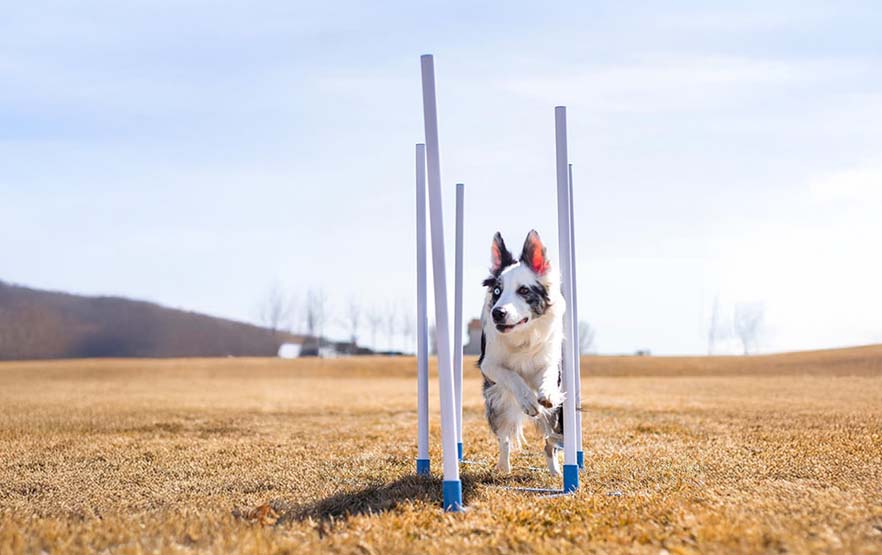
Weave poles are a series of upright poles your dog must move through in a side-to-side pattern.
Dogs enter on one side and “weave” through each pole in sequence.
This takes:
- Timing
- Rhythm
- Precision
What You Can Use at Home
You don’t need official equipment to start:
- PVC pipes in the ground
- Garden stakes
- Cones or upright objects
Start with widely spaced poles to make learning easier.
Step-by-Step: Teaching Weave Poles
Step 1: Start with Wide Spacing

Make it easy in the beginning.
- Space poles far apart
- Create a clear path
- Let your dog move naturally through
Step 2: Guide the Path
Help your dog understand the movement.
- Use a treat or hand target
- Guide them through the pattern
- Keep it slow and clear
Step 3: Build Rhythm

Encourage flow.
- Let your dog move smoothly
- Reward consistent motion
- Avoid stopping mid-pattern
Step 4: Narrow the Poles
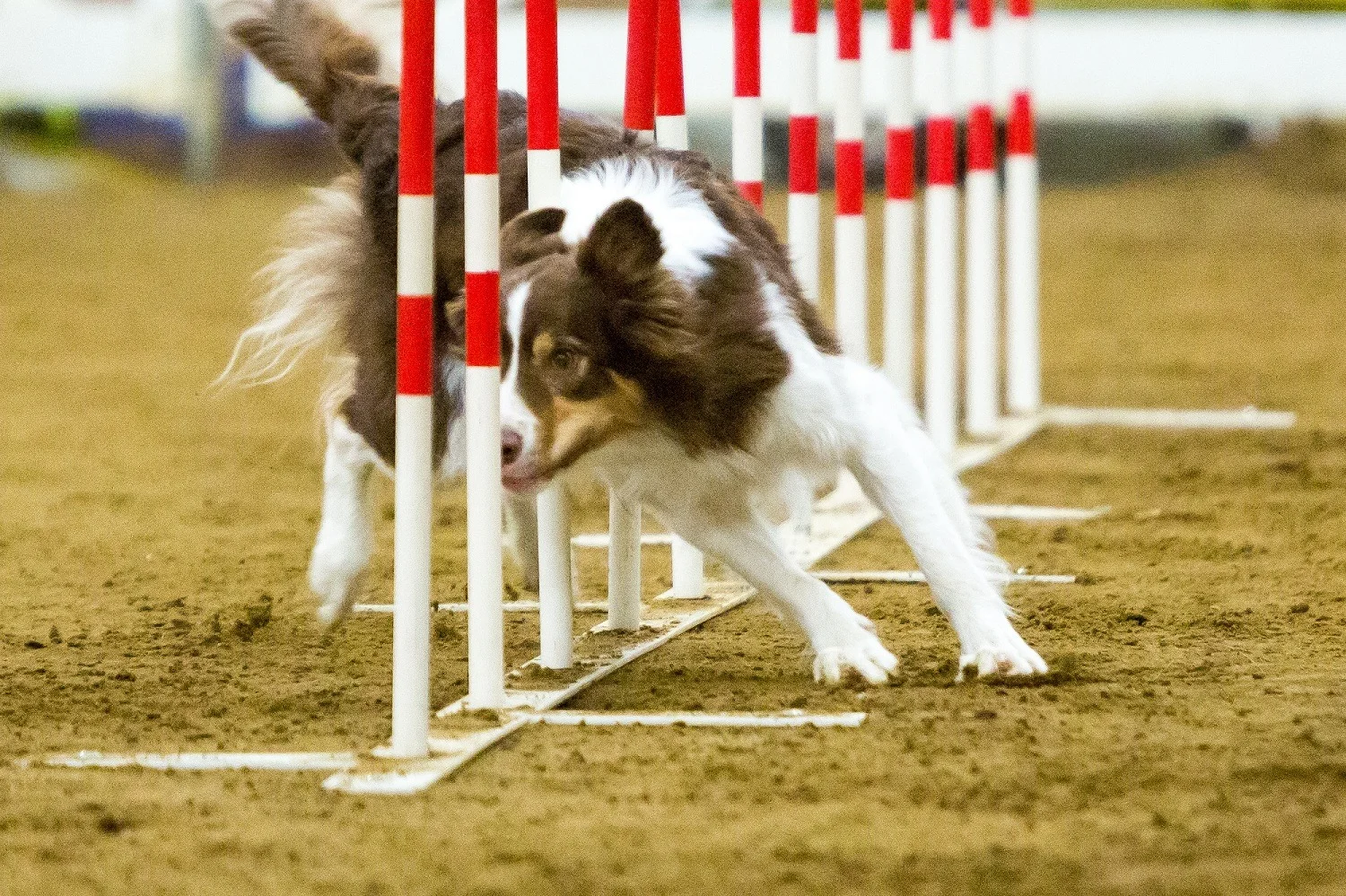
Gradually increase difficulty.
- Bring poles closer together
- Keep sessions short
- Only progress when your dog is confident
Step 5: Add Independence

Reduce your help.
- Stand more upright
- Use less guiding
- Let your dog complete the poles independently
Step 6: Add Speed and Distractions
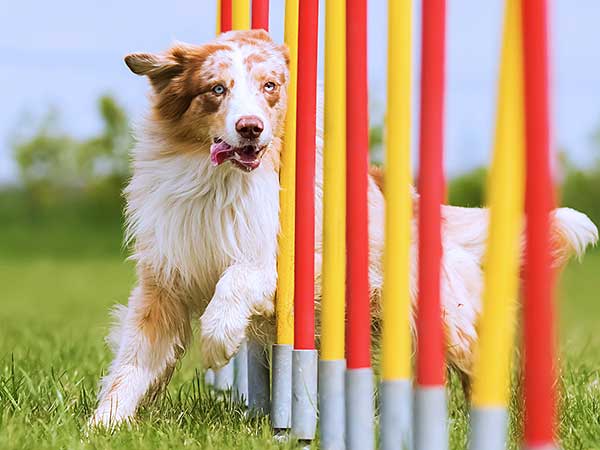
Make it more advanced.
- Add light distractions
- Increase speed naturally
- Combine with other obstacles
Tips for Success
Go slow at first
This is a thinking exercise.
Reward progress, not perfection
Small wins matter.
Keep sessions short
Mental work is tiring!
Stay consistent
Clear patterns help your dog learn faster.
Common Mistakes to Avoid
Starting too narrow
This makes learning frustrating.
Rushing speed
Speed comes after understanding.
Over-guiding too long
Fade your help as your dog improves.
Why Aussies Excel at Weave Poles
Australian Shepherds bring:
- Intelligence
- Focus
- Body control
- Desire to work with you
Weave poles give them a mental challenge they truly enjoy.
Final Thoughts
Weave poles aren’t just about movement—they’re about thinking while moving.
They teach patience.
Precision.
And connection.
And when your Aussie “gets it”?
It’s one of the most rewarding moments in training.
🐾 Related Reading
Puppy Temperament: Why It Matters More Than You Think
Rules, Boundaries, and Limitations
Dog Barking: Practical Tips for Dog Owners
Building Confidence in Your Dog
🐾 Ready to Find Your Match?
If you’re considering an Australian Shepherd puppy and want guidance through the process:
👉 Learn more here:
How to Get My Puppy
👉 View current puppies:
Available Puppies